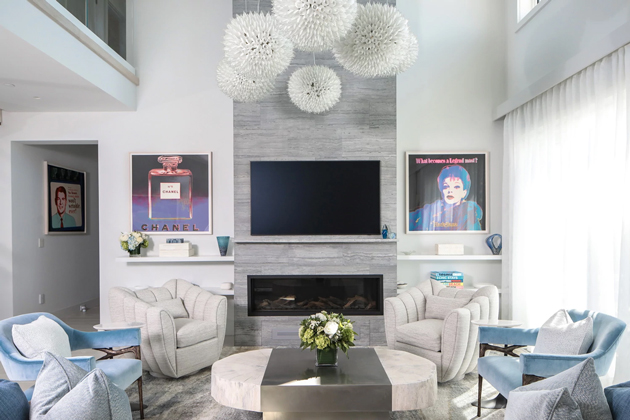
Interior design isn’t experienced logically. It’s felt emotionally first, which is why interior design psychology focuses on how people perceive, process, and remember spaces. Long before we notice whether a chair is comfortable or a layout is efficient, we’ve already formed a sense of how a room feels.
And in most cases, that feeling comes from the art.
Furniture is essential. It shapes how we move, sit, gather, and live. But art is what gives a space character. It’s what makes a room feel personal instead of staged, expressive instead of simply arranged. Furniture makes a room work. Art makes it resonate.
What would change if you began with how you want a room to feel, rather than how you want it to function?
Art Is Not Just on the Walls

When art is discussed in interiors, the assumption is often a framed piece above a console or sofa. But in considered homes, art rarely confines itself to the perimeter. It occupies space.
Sculpture interrupts circulation. Suspended installations alter vertical scale. A dramatic chandelier becomes less a fixture and more a presence. Metalwork, ceramic forms, carved wood, and collected objects placed with intention do not simply decorate a room; they recalibrate it.


A suspended piece can draw the eye upward and expand perceived volume. A freestanding sculpture can anchor a room more decisively than any seating arrangement. Even a bold lighting installation can shift the emotional aspect of a space before a single piece of furniture is registered.


When art occupies physical space rather than merely wall space, its influence becomes structural. It shapes movement, proportion, and focus. The room does not revolve around the furniture. It revolves around the presence.
Furniture Solves Problems, Art Creates Experience

Think about a room you use daily: the furniture makes it work, but the art is what makes it feel like your space rather than a showroom. Furniture exists to support physical needs, such as sitting, storing, gathering, and moving. Without it, a room doesn’t function. But furniture is largely evaluated by how well it performs. Is it comfortable? Is it durable? Does it fit?
Meanwhile, art operates differently. Art communicates identity. It signals taste, memory, values, humor, nostalgia, and aspiration. It introduces narrative into a space. A chair may be beautifully designed, but a piece of art can reveal something about the person who lives there.

Psychologically, the difference matters. We respond to imagery instinctively. The brain looks for meaning fast. Symbol, color, and contrast register before comfort ever does. Furniture supports the body. Art engages interpretation.
How Humans Emotionally Read a Room

You can feel this when you walk into a hotel lobby or a friend’s home and instantly sense whether it feels calm, cold, welcoming, or tense before you’ve sat down anywhere.
When we enter a space, we don’t start by assessing the sofa’s cushion density. We scan. We take in color, contrast, artwork, light, and scale. Within seconds, we form an impression. This emotional scanning happens fast and largely subconsciously. We instinctively interpret visual information before we assess physical comfort. Is this space safe? Is it expressive? Is it restrained? Is it chaotic?
Art often provides the clearest emotional signal in that first read. A bold abstract painting creates a different psychological atmosphere than a muted landscape. A gallery wall suggests personality and story. A single large-scale piece can introduce drama or serenity.
Before we ever sit down, we’ve already decided how the room feels. Memory begins forming in that same moment. Long after the physical experience fades, those visual anchors are often what remain.
Art Is What People Notice and Remember

This is why visitors often remember “that painting in your living room” years later, even if they couldn’t describe the sofa they sat on. When people recall a space, they don’t usually list its functional components. Instead, they reach for the elements that stood out, such as the large canvas above the fireplace, the striking photograph in the hallway, or the unexpected piece that sparked a conversation.
Art becomes the reference point. It’s what guests ask about. It’s what they associate with you. A piece of art carries a story – where it was found, why it was chosen, and what it represents.
We don’t just remember what a room looked like; we remember how it made us feel. And those feelings often attach themselves to specific visual anchors. Over time, the artwork becomes the emotional shorthand for the entire space. People may not recall the exact color of the rug, but they’ll remember the room with “the bold blue painting”.
Furniture shapes the physical experience. Art shapes emotional memory. It’s the element that lingers long after the visit is over.
Art as the Emotional North Star of a Space

Anyone who has rearranged a room that looked technically “right” but still felt unresolved has experienced this: the layout worked, the proportions were balanced, the furniture was well chosen, and yet the space lacked presence.
Often, what’s missing isn’t another object. It’s emotional direction.
Most design decisions begin with logistics. Where will the sofa sit? How much clearance does the table need? What size rug fits the footprint? These questions are necessary, but they don’t define atmosphere. An emotional goal does. Before choosing furniture and finalizing placement, there’s a quieter question that changes everything: what should this room feel like to live in?

Art can answer that question early. A muted landscape softens a space before anything else is added. A graphic black-and-white work might signal restraint and clarity. The artwork doesn’t have to dictate every decision, but it can establish tone. Once that tone is defined, other choices begin to align.
A large, commanding piece can support fewer competing elements, reducing visual noise elsewhere in the room. Smaller, layered works may invite a more intimate, collected atmosphere. When there is a clear focal point, the room doesn’t need to shout elsewhere.

Designing this way shifts the mindset. Instead of filling empty walls or solving blank corners, the process becomes about supporting a central idea. Furniture, lighting, and accessories are selected not only because they fit the space physically, but because they reinforce the emotional direction already set.
Interiors feel intentional, not because everything matches, but because everything belongs.
Why Treating Art as an Afterthought Weakens Design

There’s a common sequence in decorating: furniture first, layout finalized, lighting installed, then, at the very end, something gets hung on the walls to “finish” the room. On the surface, it makes sense. The big decisions feel more urgent. Art can wait.

But when art is added last, it rarely gets to shape anything. It adapts. It matches the palette. It fills the gap above the sofa. Instead of leading, it merely decorates. The piece may be attractive, even expensive, but it isn’t anchoring the room. It’s complying with it.
Without a guiding emotional anchor early in the process, rooms tend to default to safe decisions such as neutral upholstery, balanced symmetry, simple proportions. Nothing feels wrong. And yet the space can feel impersonal.
This is why some interiors photograph beautifully but leave no lasting impression. They feel complete, but not memorable. When art is treated as a mere accessory rather than a defining element, a room may be assembled flawlessly. It just won’t stay with you.
Why Art Is the Emotional Core of Interior Design

For decades, the default hierarchy in interior design has been layout first, furniture next, decoration last. It’s logical. It’s efficient. It ensures the room works. But what if the order is slightly off?
When emotional intent leads, the hierarchy shifts. Instead of asking what fits where, the first question becomes what the space is meant to express. Is it meant to feel quiet? Expansive? Intimate? That clarity changes every decision that follows.
Function still matters. A room must support daily life. But when those decisions are made without an emotional anchor, they tend to produce spaces that work without necessarily resonating.
Art introduces tone, perspective, and point of view. It defines the atmosphere before the furniture is finalized. Once that foundation is clear, design becomes more meaningful. Furniture then supports the experience rather than carrying the burden of defining it. The room begins to feel cohesive, not because everything coordinates, but because everything answers the same intention.
Furniture makes a room usable.
Art makes it meaningful.
That shift is what turns a room into a place people remember. ♥